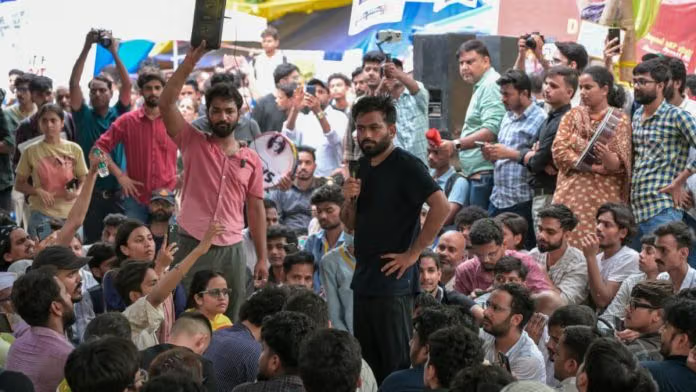
Introduction to the Jantar Mantar Protests
The Jantar Mantar protests in India have emerged as a significant focal point for student activism, reflecting a broader discourse on social and political issues. Located in the heart of New Delhi, Jantar Mantar has a storied history as a venue for demonstrations, showcasing the voices of various marginalized groups. Recently, it has witnessed students from diverse backgrounds uniting to voice their concerns over pressing issues such as educational reforms, job opportunities, and political representation.
The origin of the ongoing protests can be traced back to growing discontent among students regarding several policy decisions perceived to undermine their rights and future prospects. Initiated in response to the increasing privatization of higher education and the rising cost of tuition, students have gathered to demand a more equitable and accessible educational landscape. The protests have also amplified concerns regarding unemployment, with students advocating for more government initiatives to create job opportunities in the current challenging economy.
The demographics of the student protesters are notably diverse, representing various regions, castes, and socio-economic backgrounds. This inclusivity underlines the collective anger and aspirations of youth across India, who are increasingly aware of their role in shaping the country’s future. The protests at Jantar Mantar highlight not only the urgent demands of the students but also the broader implications for societal change. The site itself has transformed into a symbolic battleground for student rights, featuring speeches, art, and collective activities aimed at raising awareness and garnering support from the public and media.
As the protests continue to develop, they resonate with themes of democracy, equality, and empowerment, emphasizing the crucial role of student voices in the ongoing struggle for social justice in India.
Background of Student Protests in India
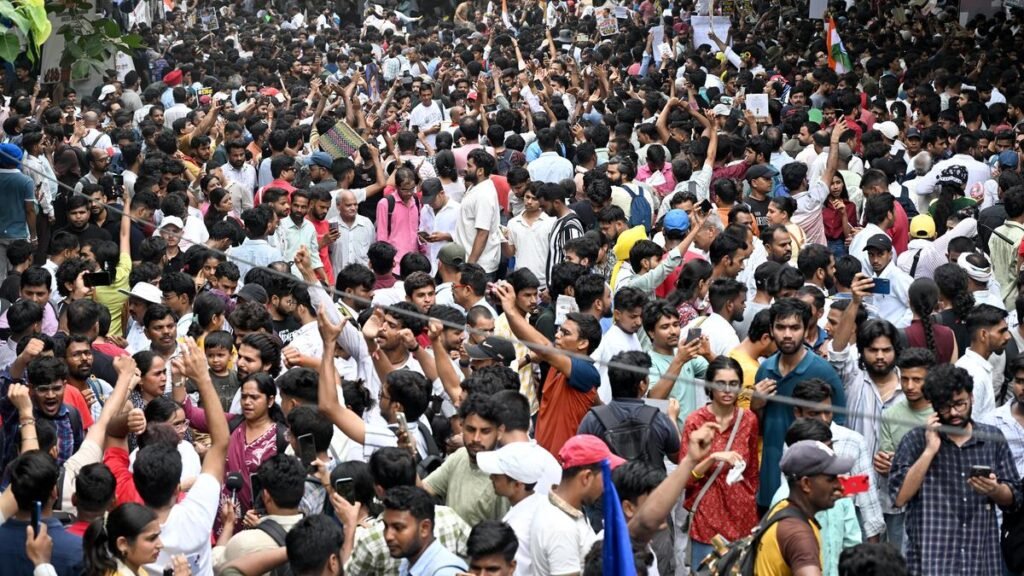
Student activism in India has a long and significant history, marked by several pivotal movements that have shaped the socio-political landscape of the country. From the anti-colonial struggle against British rule, where students played a crucial role in mobilizing the masses, to post-independence protests addressing issues such as poverty, corruption, and educational reforms, student movements have often been at the forefront of societal change. One of the notable movements was the 1975-77 Emergency, which saw a wave of protests against government repression and curtailment of civil liberties. During this period, student organizations became platforms for dissent and rallied against the authoritarian regime.
As India transitioned into the 21st century, the focus of student activism adapted to contemporary issues. The 2006 anti-reservation protests against the government’s decision to increase quotas for backward classes in educational institutions exemplified the rise of students challenging government policies perceived as unjust. More recently, the protests against the Citizenship Amendment Act (CAA) in 2019 drew significant participation from students across various campuses, showcasing their influence and willingness to tackle matters of national importance.
The resurgence of student protests in India today can be attributed to a combination of factors within the current socio-political climate. Students are increasingly vocal about educational reforms, the quality of education, and access to opportunities. Concerns regarding governmental policies that impact educational institutions—such as funding cuts, changes to syllabi, and political interference—have ignited a renewed sense of activism among young people. Additionally, the socio-economic disparities exacerbated by the ongoing pandemic have further fueled frustrations, prompting students to unite against what they perceive as deficiencies in governmental support for education and welfare.
Key Issues Highlighted by the Protesters
The ongoing protests at Jantar Mantar, primarily spearheaded by students from various educational institutions in India, center around several core issues that resonate deeply within the student community. One of the principal grievances is inadequate educational funding, which protesters argue has led to a decline in quality and accessibility of education across the country. Students are advocating for increased government investment in educational institutions to ensure that all students, regardless of their socio-economic background, can benefit from quality education and facilities.
In addition to financial concerns, protesters are also demanding better infrastructure in universities and colleges. Many institutions suffer from dilapidated facilities, lack of basic amenities, overcrowded classrooms, and insufficient resources for practical learning. The students’ call for infrastructural improvements reflects a broader desire for a conducive learning environment that can prepare them effectively for future challenges in an increasingly competitive job market.
Moreover, the students are raising issues of social justice, including calls for the protection of marginalized communities within educational spheres. This includes demands for affirmative action and fair representation of underprivileged groups in student bodies and faculty positions. Through this activism, the protesters are not merely seeking personal gains but are striving for a more equitable educational landscape that addresses historical injustices.
Political concerns are also at the forefront of the protests, with many students expressing dissatisfaction with governmental policies that they believe undermine educational and social rights. They are advocating for reforms that promote transparency, accountability, and inclusivity in educational governance. Overall, the key issues highlighted by protesters at Jantar Mantar reflect a deep-seated frustration with systemic failures in India’s educational system and a passionate plea for transformative changes that can lead to more equitable opportunities for all students.
Role of Social Media in Mobilizing Protesters
In recent years, social media has emerged as a powerful tool in the organization and mobilization of social movements worldwide. The ongoing Jantar Mantar protests by students in India exemplify this phenomenon. Platforms such as Twitter, Instagram, and Facebook have significantly influenced the way protesters communicate, share information, and garner support, both online and offline.
Social media facilitates real-time communication, enabling protesters to quickly disseminate information about events, planned gatherings, and specific issues that require immediate attention. For instance, various student organizations have leveraged Twitter hashtags to draw attention to their demands, ensuring that their voices reach a wider audience. This immediate engagement fosters a sense of solidarity and collective action among protesters, allowing them to coordinate efforts effectively.
Furthermore, social media serves as a powerful medium for shaping public perception. Visual content shared on Instagram and Facebook can evoke strong emotional responses, helping to humanize the protesters’ cause and illustrate the urgency of their concerns. By sharing personal stories and testimonies, students have successfully portrayed their struggles, inviting empathy and support from those who may not have been previously aware of the issues at stake.
The interconnectedness of social media platforms also allows for a cross-pollination of ideas, wherein students from diverse backgrounds can connect and learn from one another’s experiences. Online campaigns can transcend geographic boundaries, contributing to a sense of national and global solidarity among those advocating for education reform and social justice in India. The viral nature of social media content means that the reach of the protests can expand exponentially, leading to increased visibility and mobilization.
Ultimately, social media has proven indispensable in the ongoing Jantar Mantar protests, playing a pivotal role in organizing activists, shaping narratives, and fostering an environment for enduring change. The innovative use of these platforms underscores the evolving nature of protests in the digital age, positioning social media as a critical component in the fight for rights and reforms.
Government Response to the Protests
The ongoing protests at Jantar Mantar, led predominantly by students, have seen a multifaceted response from the government and law enforcement agencies. The protests stem from a variety of concerns, including educational reforms, social justice, and rising unemployment rates. The nature of the protests has compelled the government to take both proactive and reactive measures in addressing the situation.
In the initial phases of the protests, law enforcement was deployed in significant numbers to maintain order and prevent any escalation. This response included barricading access points to the protest site and implementing crowd control measures. High-profile student leaders have faced arrests and harassment, raising concerns regarding freedom of assembly and expression. These actions have drawn criticism from various quarters, indicating potential overreach by the authorities.
Political responses have varied across the spectrum. Some government officials have attempted to engage in dialogue with student representatives, signaling an awareness of the issues at hand. However, these attempts at negotiation often seem superficial, lacking concrete commitments to address the systemic problems cited by the protestors. Additionally, statements from political figures have ranged from supportive rhetoric to dismissive views, influencing public perception significantly.
It is noteworthy that the government has also resorted to the use of social media to counteract the narrative promoted by the protestors. Official communication channels have shared messages that highlight the perceived benefits of existing policies while downplaying the urgency of the students’ demands. This strategic communication approach aims to position the government as responsive while simultaneously attempting to delegitimize the protests.
Overall, the government’s response has been characterized by a combination of negotiation attempts, enforcement measures, and communication strategies. The evolving dynamics surrounding the protests will determine the effectiveness and outcomes of these governmental initiatives moving forward.
Public Opinion and Support for the Movement
The ongoing Jantar Mantar protests by students in India have evoked a diverse array of public reactions and sentiments, reflecting the varied perspectives within society. As the protests gain momentum, different segments of the populace have voiced their support or opposition, indicating a complex interaction between the movement and public opinion.
Support for the student protests has emerged prominently from various youth organizations, educational institutions, and civil rights activists who resonate with the call for accountability, transparency, and reforms in the educational system. Many young individuals perceive the protest as a critical platform for voicing their grievances regarding issues like fee hikes, lack of infrastructure, and insufficient opportunities for students. This collective action has garnered attention and sympathy from not only fellow students but also from parents and educators who understand the systemic challenges faced by learners today.
Conversely, there exists a notable faction within the public that expresses skepticism towards the motives behind the protests. Some critics argue that the movement could lead to disruptions in academic environments and question the efficacy of demonstrations as a means to initiate change. Moreover, political narratives often sway public opinion, wherein groups may be mobilized against the protests, framing them as detrimental or unrepresentative of the larger student body. This polarization illustrates the ongoing dialogue among the citizens regarding the legitimacy and purpose of the protests.
Additionally, social media platforms play a pivotal role in shaping public perception, allowing real-time exchange of ideas, opposition to the protests, and solidarity among supporters. The digital landscape facilitates broadening discourse, potentially transforming the narrative surrounding the movement as various stakeholders engage with the unfolding events. Overall, the public’s response to the Jantar Mantar protests is multifaceted, revealing deep-seated societal divisions as well as an overarching quest for justice and reform within India’s educational framework.
International Reactions to the Protests
The ongoing Jantar Mantar protests by students in India have garnered significant attention on the global stage, prompting reactions from various international organizations, foreign governments, and civil society groups. The protests, which highlight issues such as access to education, student rights, and governmental accountability, have resonated with many advocates for social justice worldwide.
Numerous human rights organizations have expressed solidarity with the student demonstrators, urging the Indian government to respect the freedom of expression and assembly. International NGOs, including Amnesty International and Human Rights Watch, have released statements calling for an immediate response to concerns raised by the protesters. These statements often emphasize the importance of peaceful protest and the need for dialogue to address the grievances raised by the students.
Foreign governments have also reacted to the situation, with some issuing comments supportive of the students’ right to protest. For instance, embassies of several Western nations have expressed concern over reports of brutality against protesters and have encouraged the Indian authorities to engage constructively with the youth movements. This international scrutiny compels the Indian government to consider the implications of its actions on the global perception of its commitment to democratic values.
Additionally, global movements and online solidarity campaigns have emerged, uniting students from various countries around common issues affecting education and youth rights. Social media platforms have played a pivotal role in amplifying the voices of Indian students, with hashtags and campaigns gaining traction worldwide. These movements not only provide a framework of support but also foster connections between students dealing with similar challenges across borders.
In light of this context, the Jantar Mantar protests have not only become a pivotal moment for Indian students but also a point of interest and debate among international observers, highlighting the universal struggle for educational rights and political representation.
Potential Impact of the Protests on Future Policies
The ongoing protests at Jantar Mantar, driven by a diverse group of students in India, are not merely expressions of discontent but represent a significant moment in the evolution of educational policies and students’ rights within the country. Historically, student movements have played a pivotal role in shaping policy directions and sparking reforms in various sectors. The current unrest, characterized by demands for affordable education, better infrastructure, and increased representation, may steer future legislative agendas toward a more inclusive approach.
Considering the legal frameworks surrounding education, these protests could catalyze governmental reconsideration of existing policies. Current education laws may not adequately address the socio-economic barriers that students face, and thus, sustained pressure from the protestors has the potential to prompt a re-evaluation of such policies. For instance, amendments to the Right to Education Act could emerge if the movement gains traction and garners widespread support, focusing on ensuring equitable access to higher education.
In addition to policy amendments, the protests could influence the discourse surrounding student rights. As the student body asserts its voice, there is a chance that educational institutions will adopt more robust mechanisms to uphold students’ rights, such as creating grievance portals or councils dedicated specifically to student welfare. Historical precedents reveal that student activism often leads to the establishment of frameworks that protect and enhance students’ roles within educational institutions.
Furthermore, the national conversation surrounding education could shift towards a more progressive model that prioritizes student engagement in policy formation. This renewed focus could create a more participative environment where students feel empowered to influence decisions affecting their educational futures. Ultimately, the Jantar Mantar protests hold the potential to ignite a transformative process in India’s educational landscape, emphasizing the importance of students in shaping the policies that directly impact their lives.
Conclusion: The Future of Student Protests in India
Throughout the history of India, student protests have served as a powerful catalyst for change, influencing both social and political dynamics. The ongoing demonstrations at Jantar Mantar exemplify the vitality of student activism, underscoring how university students are at the forefront of advocating for their rights and voicing societal challenges. As the nation witnesses these events unfold, it becomes increasingly clear that the essence of these protests is rooted in a desire for justice and reform.
Moreover, the importance of dialogue cannot be overstated. Continuous engagement among students, policymakers, and the broader societal framework is vital for addressing the pressing issues that provoke such unrest. The protest at Jantar Mantar demonstrates that students are not merely passive observers of political discourse but active participants shaping the future landscape of India. By demanding accountability and transparency, they are laying the groundwork for a more inclusive decision-making process.
As we reflect on the implications of these student movements, it is crucial to recognize their potential to foster a more critically engaged citizenry. The current protests may very well signal a shift in how the younger generation views their role in governance and civic responsibilities. Historical events have shown that student activism has often acted as a precursor to broader social reforms; thus, their ongoing struggles could foreshadow significant political evolution in India.
In conclusion, the future of student protests in India is not just about the current demonstrations in Jantar Mantar but indicates a broader commitment to civic engagement and reform. Students are poised to continue this legacy of activism, a testament to their determination to advocate for a fair and equitable society. Continued support and dialogue surrounding these issues remain crucial for fostering a political environment that reflects the diverse voices of its constituents.